What if you could become a Montessori teacher without putting work, family or everyday life on hold?
For many future teachers, that is what makes online Montessori training so appealing. You may already be working with children, raising a family, considering a career change, or living far from a Montessori training center. Being able to complete much of your training online can make this path feel far more within reach.
But convenience is only part of the picture. Montessori education is deeply practical, so an important question remains: can you really become a Montessori teacher online and still receive recognized, well-rounded training?
Yes, but online learning is only one part of the journey. Much of Montessori teacher education can be completed online, while hands-on practice, time with children and experience in a Montessori environment are essential parts of preparing future teachers for the classroom.
Why Montessori teacher training needs more than online learning
A “fully online” course may sound appealing, but Montessori teacher preparation needs more than flexibility. Before enrolling, check whether the program includes live teaching, hands-on work with Montessori materials, in-person training, supervised practicum and program accreditation.
The American Montessori Society (AMS) does not affiliate fully online teacher education programs, while the Association Montessori Internationale (AMI) also requires its diploma courses to include a significant in-person component.
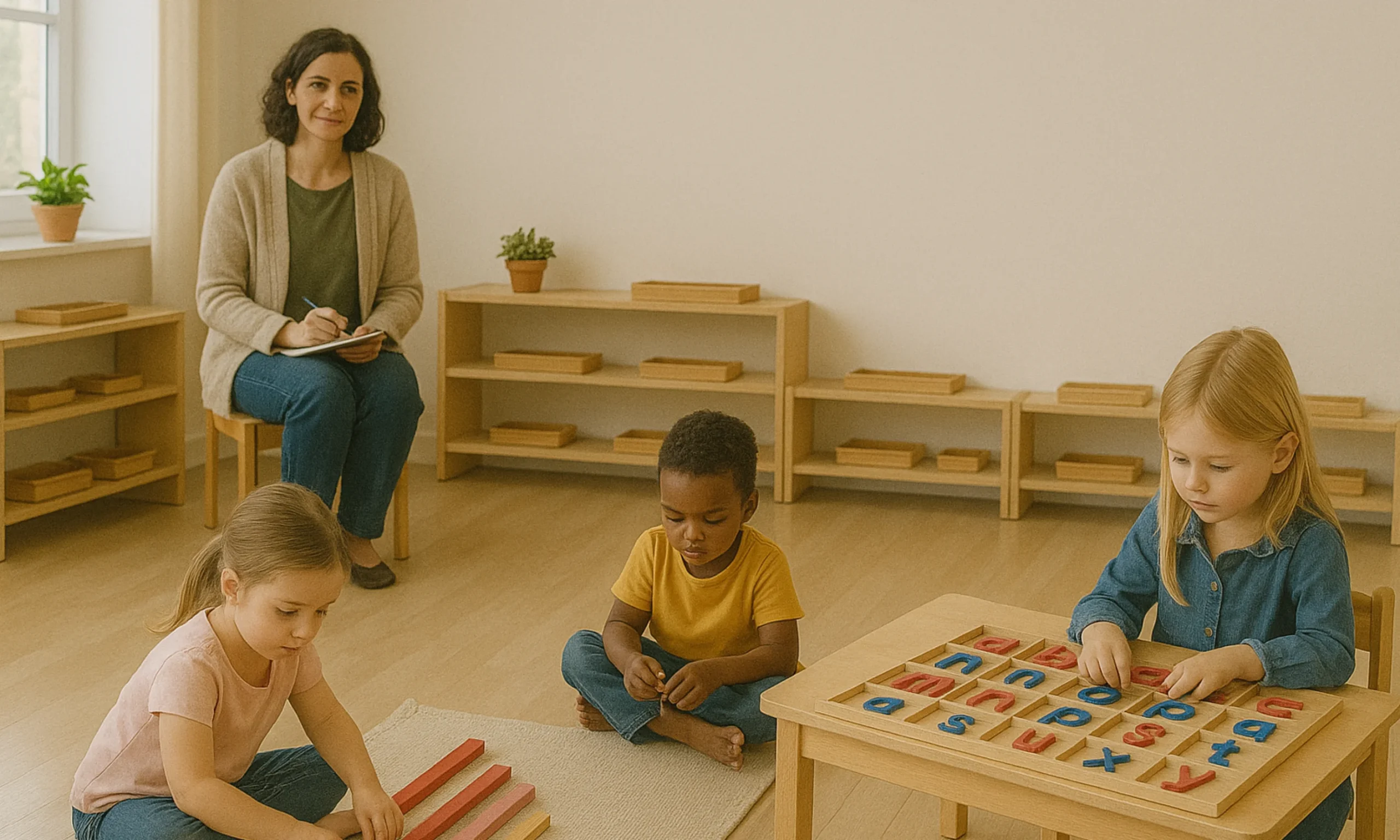
There is an important Montessori reason for this. A teacher must learn more than lessons and presentations. They must learn how to observe, when to guide and when to give a child space to work independently.
This is part of becoming the prepared adult, a key idea in Montessori education. The teacher prepares not only the environment but also themselves, developing patience, awareness and the judgement needed to respond thoughtfully to each child.
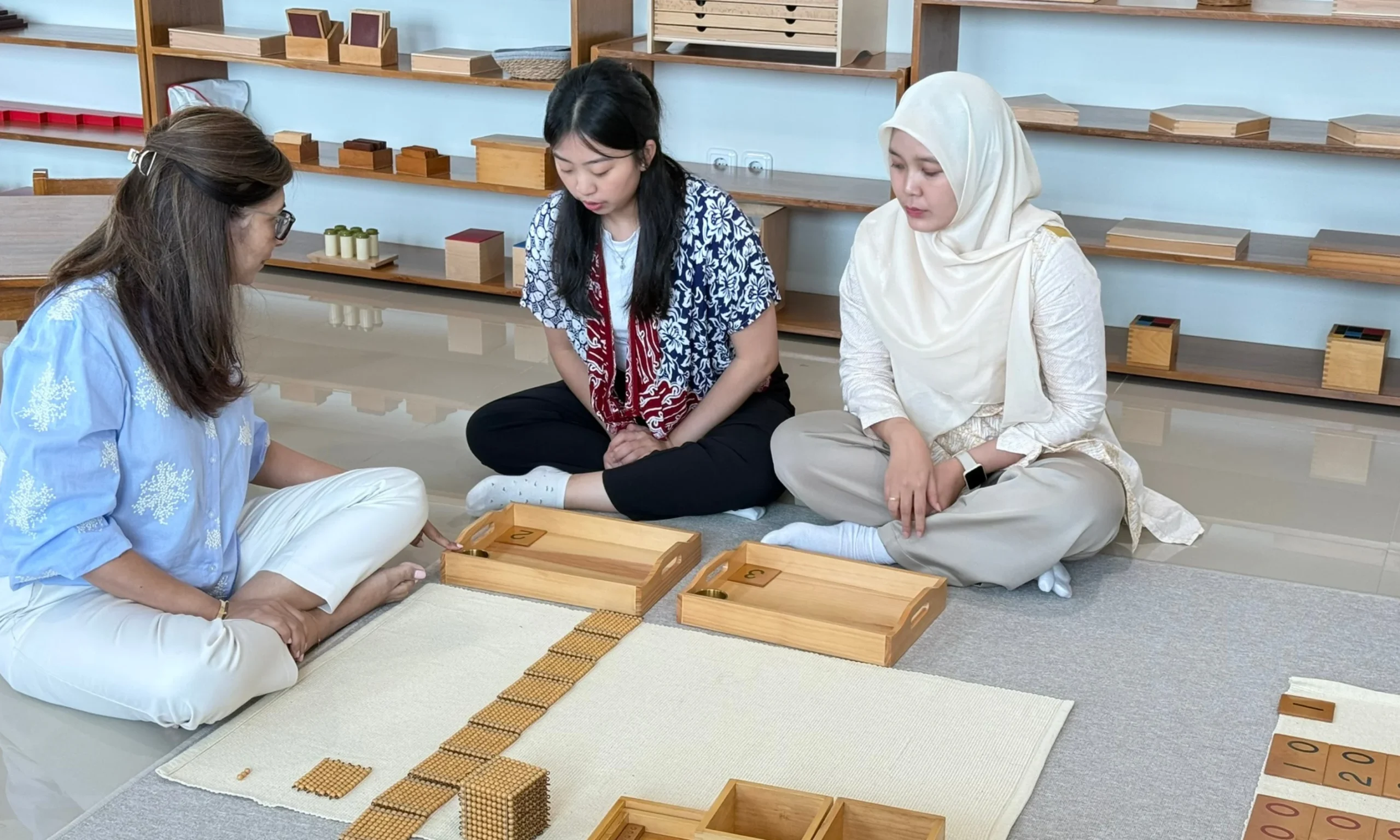
Working directly with Montessori materials, receiving feedback and spending time in a real classroom help bring these ideas to life. That is why many accredited Montessori teacher education programs combine online study with live teaching, hands-on training and classroom experience. This combination is known as hybrid Montessori teacher training.
What should you look for in a good hybrid Montessori teacher training program?
A strong hybrid program should give future Montessori teachers both flexibility and practical experience, while meeting recognized standards.
Before choosing a program, look for:
- Accreditation: Who accredits the program, and is the accreditation clearly stated?
- Online learning: Does the course offer flexibility while still covering Montessori philosophy, child development and lesson preparation in a structured way?
- Live teaching: Are there opportunities to ask questions, discuss ideas and receive guidance from trainers?
- Hands-on practice: Will you work directly with Montessori materials and practice presentations?
- A supervised practicum: Will you have the opportunity to observe children and apply what you have learned in a real Montessori environment?
Together, these elements help ensure that the training is not only accessible and flexible, but also meaningful, practical and well structured. A strong hybrid program should give future teachers opportunities to build knowledge, practice skills, receive feedback and gradually apply what they have learned in a real Montessori environment.
The aim is not simply to complete coursework online, but to develop the confidence, judgement and practical understanding needed to work thoughtfully with children.
What does hybrid Montessori training look like at the Academy of Montessori?
For future Montessori teachers who want flexibility without losing the practical side of training, the Academy of Montessori (AOM) brings both together.
Its Early Childhood Teacher Education Program holds Full Accreditation from the Montessori Accreditation Council for Teacher Education (MACTE). The program follows a hybrid model, with more than half of the learning delivered online alongside in-person training and practicum experience.
The two-year program, designed to prepare teachers to work with children aged 2.5 to 6 years, includes:
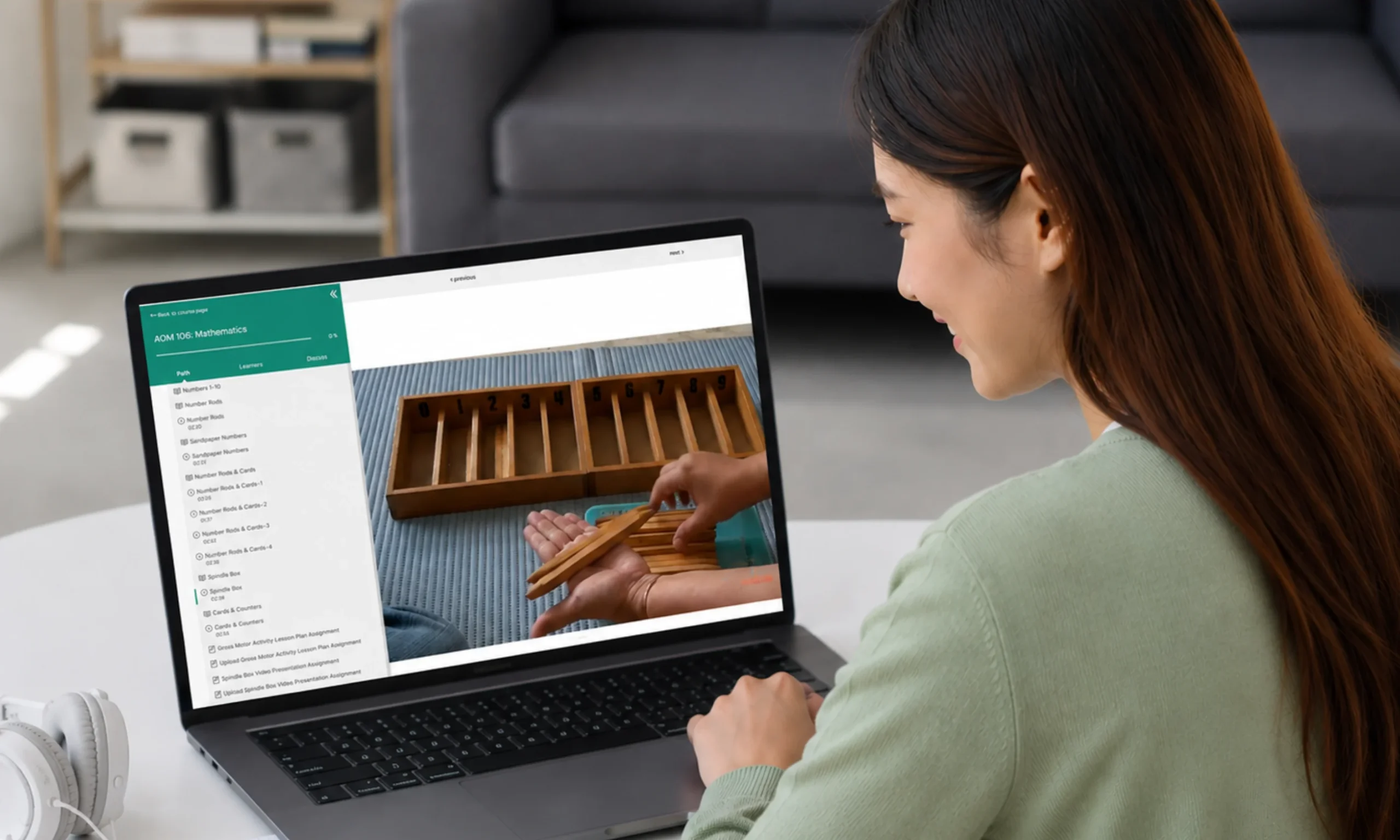
- 300+ online videos that trainees can work through at their own pace
- Weekly live Zoom sessions with trainers and other learners
- 120 hours of in-residence training in Jakarta, Indonesia
- 400 hours of teaching practicum in a Montessori school in the trainee’s home town
The curriculum includes areas such as Montessori philosophy, child development, Practical Life, Sensorial, Language, Mathematics, observation, curriculum planning and classroom leadership.
Together, these elements allow future teachers to complete much of their training with flexibility, while still gaining the hands-on experience needed for the Montessori classroom.
Becoming the teacher the child needs
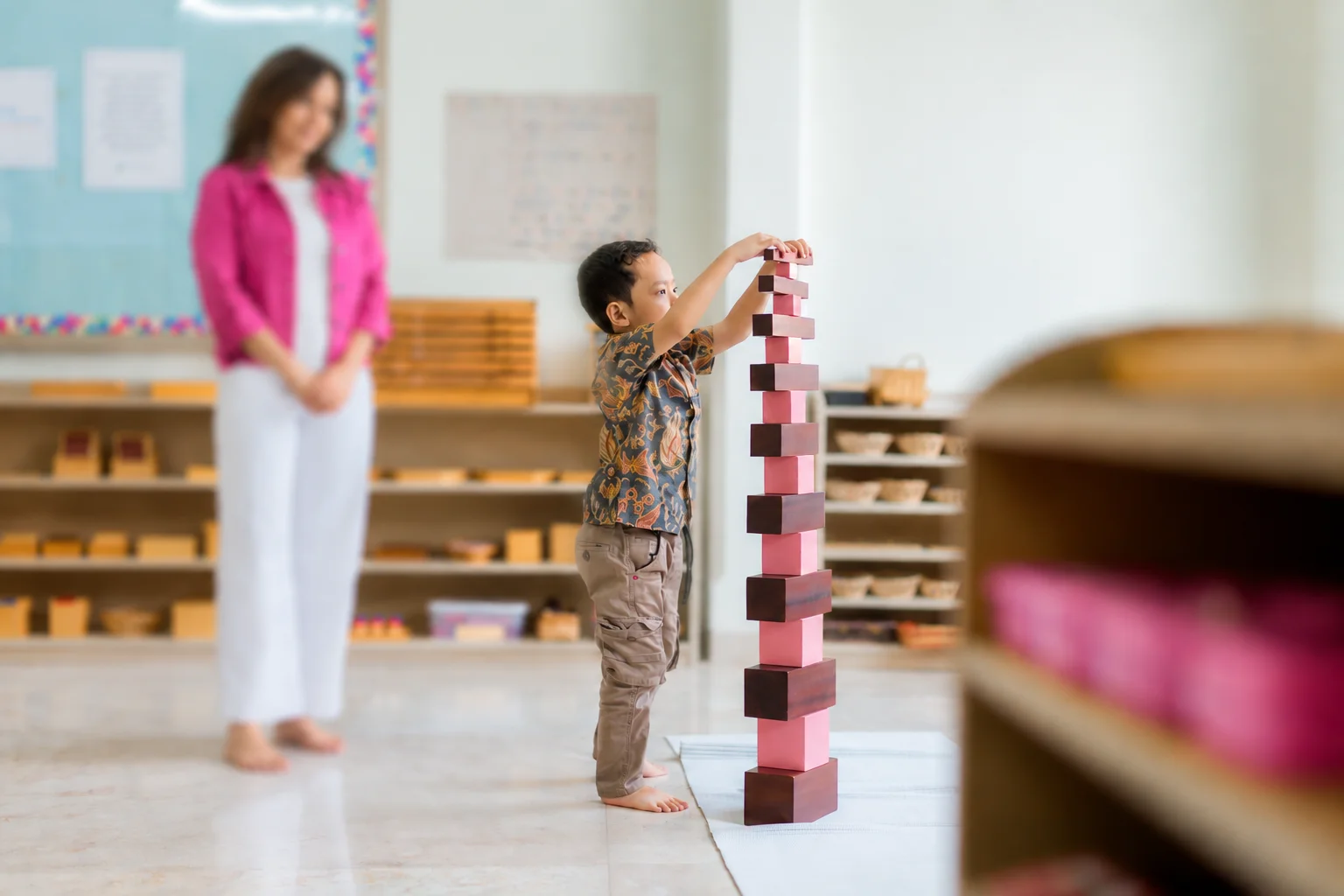
The path to becoming a Montessori teacher may begin online, but the heart of the work is always with the child. It is in learning to observe more carefully, to prepare with intention, and to know when to guide and when to step back.
A strong hybrid program gives future teachers the flexibility to begin that journey in a way that fits their lives, while still giving them the real experience needed to grow into the role.
Because in the end, Montessori training is not only about gaining a qualification. It is about becoming the kind of adult who is truly ready to support a child’s growth, independence and confidence.