You open one Montessori training website, then another. One offers an AMI diploma. Another mentions an AMS credential, or teaching qualification. A third highlights MACTE accreditation. You began by looking for a course to help you work with children. Now you are trying to understand what these letters mean and whether the qualification will help you follow the career you want.
It makes sense to pause here. Training takes time, money, and commitment. Before you choose a course, it helps to know who awards the qualification, how the program is checked for quality, and what employers expect.
Understanding AMI AMS and MACTE
AMI, AMS, and MACTE are often mentioned together, but they do not stand for three equal types of qualification. AMI and AMS each have their own training routes and teaching qualifications. MACTE reviews and accredits Montessori teacher education programs. A program can be linked to a Montessori organization and also hold MACTE accreditation.
This difference matters when you compare courses. Affiliation means that a program has a formal connection to a Montessori organization. Accreditation means that a program has been reviewed against set standards. Neither automatically gives you permission to teach in every country.
AMI and its teacher training route
The Association Montessori Internazionale (AMI) was founded in 1929 by Maria Montessori and her son, Mario, to support and preserve her work. Today, it continues to support Montessori education around the world through its training network and other activities.
Students who successfully complete an AMI diploma course receive an AMI diploma for the age group they studied. If you are considering this route, check the training center, course requirements, supervised practice, and age group. The organization’s name is useful, but you also need to know what that particular course will require of you.
AMS and its teacher training route
The American Montessori Society (AMS) was founded in 1960 by educator Nancy McCormick Rambusch to support Montessori education in the United States. It now supports educators, schools, and teacher education programs around the world.
Students in AMS-affiliated teacher education programs receive an AMS credential when they successfully meet the required conditions. These programs include Montessori philosophy and preparation for classroom work. Before choosing a course, check the qualification offered, entry requirements, practical experience, and what you must do to complete it.
An organization’s name cannot answer every question. Also consider how the program will prepare you to work with children in the type of school or classroom you have in mind.
MACTE and program accreditation
The Montessori Accreditation Council for Teacher Education (MACTE) is a U.S.-based organization that accredits training programs. It has been recognized by the U.S. Department of Education since 1995. MACTE accredits Montessori teacher education programs. It does not award its own Montessori teaching qualification.

MACTE’s accreditation standards look at evidence of what students learn, how trainers develop their skills, and how well the program can provide and improve its training. Programs must also show how they help students develop the knowledge and skills that MACTE requires of Montessori educators.
A MACTE-accredited program may be linked to a Montessori organization or operate independently. This means a program can have both affiliation and accreditation. When comparing courses, check the exact program and age group in MACTE’s official directory. A logo or a general statement on a training provider’s website is not enough to confirm these details.
What international recognition means for your career
Schools in different countries may accept a Montessori qualification, but this does not mean it meets the requirements for every teaching job. You need to check both the qualifications an employer accepts and the rules set by local education authorities.
Before you enroll, think about where you hope to work. Ask possible employers which Montessori qualifications they accept. Also check whether you need a degree, teacher registration, or other local qualifications. These steps are especially helpful if you plan to work abroad.
If you have not decided where to work, ask the training provider to explain the qualification clearly and share information you can check. Hearing about past students’ experiences can help. However, getting the same qualification does not mean you will meet the requirements for the same jobs.
Looking beyond the initials
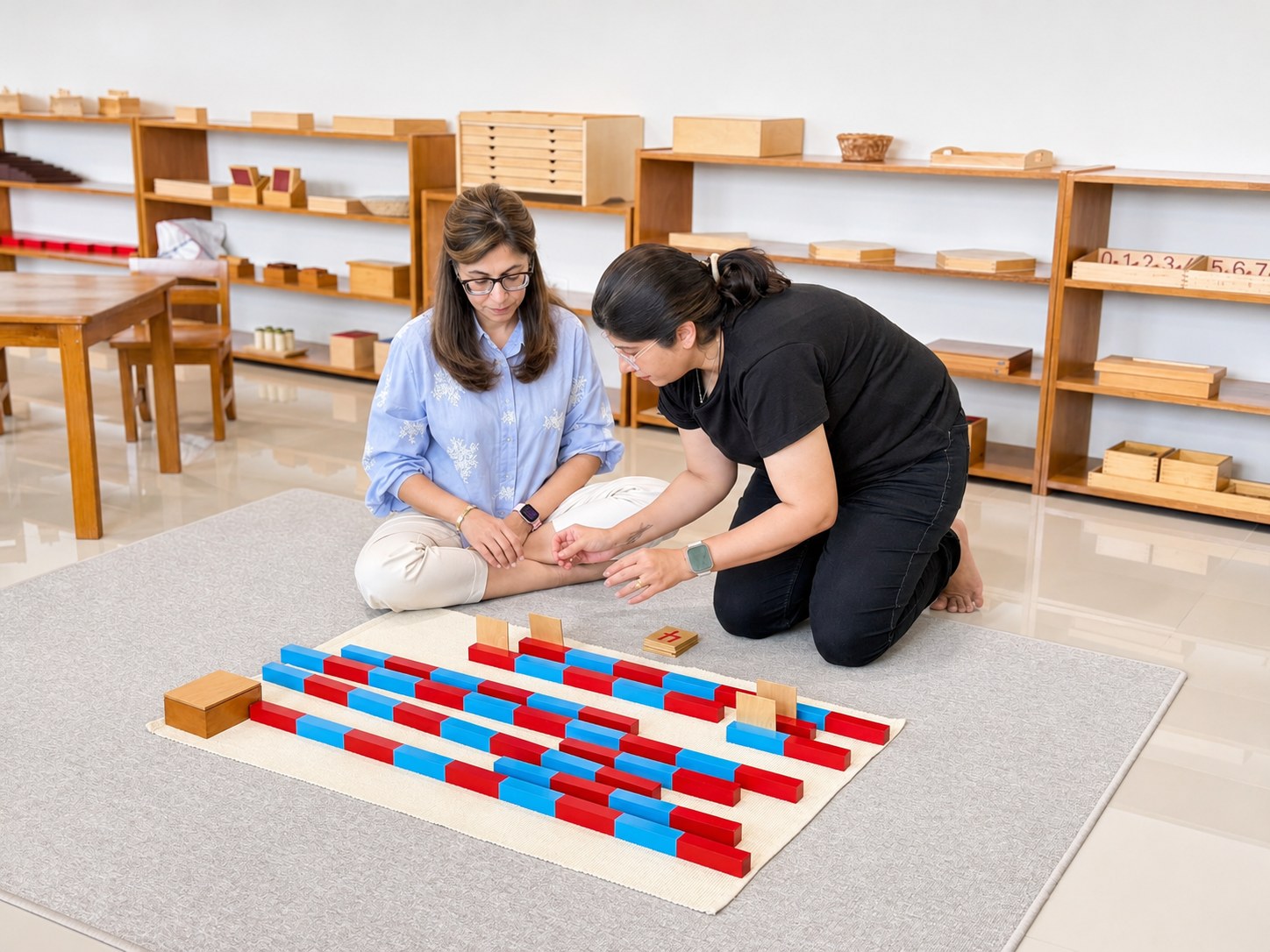
Once you understand the qualification, look closely at how you will learn. How will you practice presenting the materials? Who will observe your work and give feedback? What classroom experience must you complete, and how will you arrange it? These details help you understand the preparation you will receive before earning your diploma.
Think about how the course will fit into your life, too. A hybrid course combines online and in-person learning. It may fit around your other responsibilities, but you still need time for in-person training, assignments, and practicum, or classroom practice. Ask about the full cost and everything you must complete before you commit.
Choose training that helps you put Montessori principles into practice through careful classroom decisions. Through study, practice, and reflection, you learn when to present a lesson, observe more closely, or offer support.
Preparing for the responsibility of teaching
Choosing Montessori training means preparing to understand children and create an environment that supports their development. The qualification matters. So does learning to observe carefully, guide children with a clear purpose, and notice when they need time to work independently.
If you are considering this training route, the Academy of Montessori’s Early Childhood program for ages 2.5–6 holds Full Accreditation from MACTE. It combines online learning with in-person training and classroom practice. You can explore how the program works and what it requires to decide whether it fits your situation and teaching goals.
Frequently asked questions
What is the main difference between AMI AMS and MACTE?
AMI and AMS each have training routes that lead to their own teaching qualifications. MACTE accredits teacher education programs. A program can be linked to a Montessori organization and also be accredited by MACTE.
Does MACTE accreditation mean a program awards an AMI or AMS credential?
No. MACTE accreditation alone does not mean a program awards an AMI or AMS credential. Ask the training provider who awards the qualification. Check any claimed link to a Montessori organization separately.
Can a Montessori qualification help me teach abroad?
It may help you apply for jobs in Montessori schools abroad. Each employer decides which qualifications it accepts. You must also check the local requirements for teaching and working in that country.
Can I begin training without an education degree?
Some programs accept students who do not have an education degree. However, entry requirements and the qualifications awarded differ between programs. Employers or education authorities may also require other qualifications.
Is the Academy of Montessori program MACTE accredited?
Yes. MACTE’s directory lists the Academy of Montessori’s Early Childhood program at its Kelapa Gading location with Full Accreditation. Check the official listing when comparing programs because accreditation status can change.